

ST. PETERSBURG, Fla. – Maybe the Tampa Bay Rays unpacked their bags too soon.
From initial interest coming out of Hillsborough County, the Rays could settle into new digs, on the campus of present Hillsborough Community College (HCC) in Tampa, within the next three years.
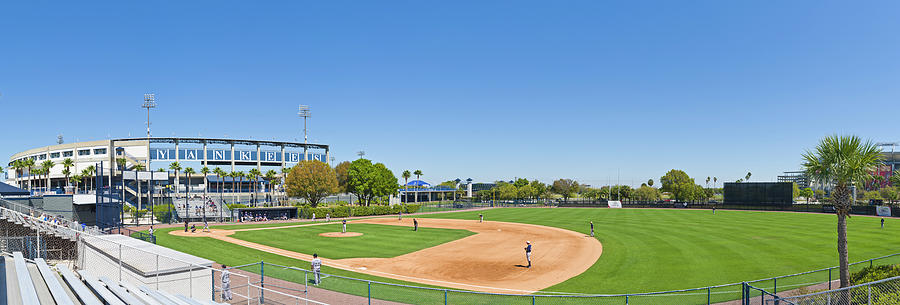
That location is right down the street on the Dale Mabry Highway from George Steinbrenner Field and that’s where the Rays were forced to conduct their 2025 season. In October, 2024, Hurricane Milton ripped the roof of Tropicana Field, the Rays’ home since their inception in 1988, and forced the team to occupy temporary quarters at Steinbrenner.
Now, there appears to be momentum in the Rays’ quest for a new stadium. Compared to previous bouts of mistrust, misery and uncertainty, the kind of optimism generated by a Jan 20 decision from the HCC Board of Trustees is refreshing.
The board entered into a non-binding memorandum of understanding (MOU) with the Rays. The agreement establishes a three-part project and includes redevelopment of the HCC campus on Dale Mabry, a new stadium for the Rays, and mixed-use development with shops, restaurants, and retail operations.
The Rays envision the mixed-use area modeled after The Battery in Atlanta, and home to the Braves and several amenities.
For the first time in nearly two decades, the Rays appear to have a clear path to the future. Under previous owner Stuart Sternebrg, that Rays’ administration fought with the city of St Petersburg and Pinellas country over building a new stadium in the Gas Plant district.
That is the location of Tropicana Field and a historic area to the African American community. Economic development, in association with the Rays’ desire for a new stadium, has been a serious conversation for decades. Now, it appears the Rays have packed their bags and are moving across Tampa Bay.
The previous proposal, under the Sternberg regime, ended when the Rays would not commit to a $700 million contribution to the new stadium project. Eventually, Sternberg sold the club to Patrick Zalupski, a Jacksonville-area real estate developer, who thinks the best option for the Rays is to relocate across Tampa Bay to Hillsborough County.
Now, that vision appears clear, or at least clearer.
“It’s early innings,” Rays’ CEO Ken Babby was quoted by the Tampa Bay Times during remarks to HCC board members. “Today is just a step — a milestone — in the process.”
THE MOU gives the college 180 days to vote on a final agreement with the Rays.
Who’s on first? … Look for a dramatic transformation in the composition of the Tampa Bay Rays’ roster for the upcoming season. Following a plethora of moves here in the off-season, the roster, which opened the 2025 season, appears to be a shell.
Consider…
Five starters, who opened the season on March 28 of last year, no longer call central Florida their home address. Among those who started on opening day 2025, second baseman Brandon Lowe was dealt to Pittsburgh. Outfielder Josh Lowe was traded to the Angels. Just before the 2025 trade deadline, catcher Danny Jansen was traded to Milwaukee and since signed with Texas as a free agent. Outfielder Christopher Morel was designated for assignment and Curtis Mead was dealt in mid-season to the Chicago White Sox.
Plus, starter Shane Baz was dealt to Baltimore, and closer Pete Fairbanks signed, as a free agent, with Miami.
All of which will likely produce three outfielders to open the 2026 season that were not on the Tampa Bay roster, which ended last season. Plus, the starting rotation remains in flux, and the Rays are probably counting too much on a viable return from lefty Shane McClanahan, who lost the entire 2025 season with nerve issue in his left triceps.
With a month out before commencement of spring training, there is still time for Erik Neander, the club’s president of baseball operations, to upgrade. Then again, the history of the Rays has been successful without major and significant trades.
Those with marginal financial risk seem to support Neander’s contention of finding quality players with minimum liability to the organization.